
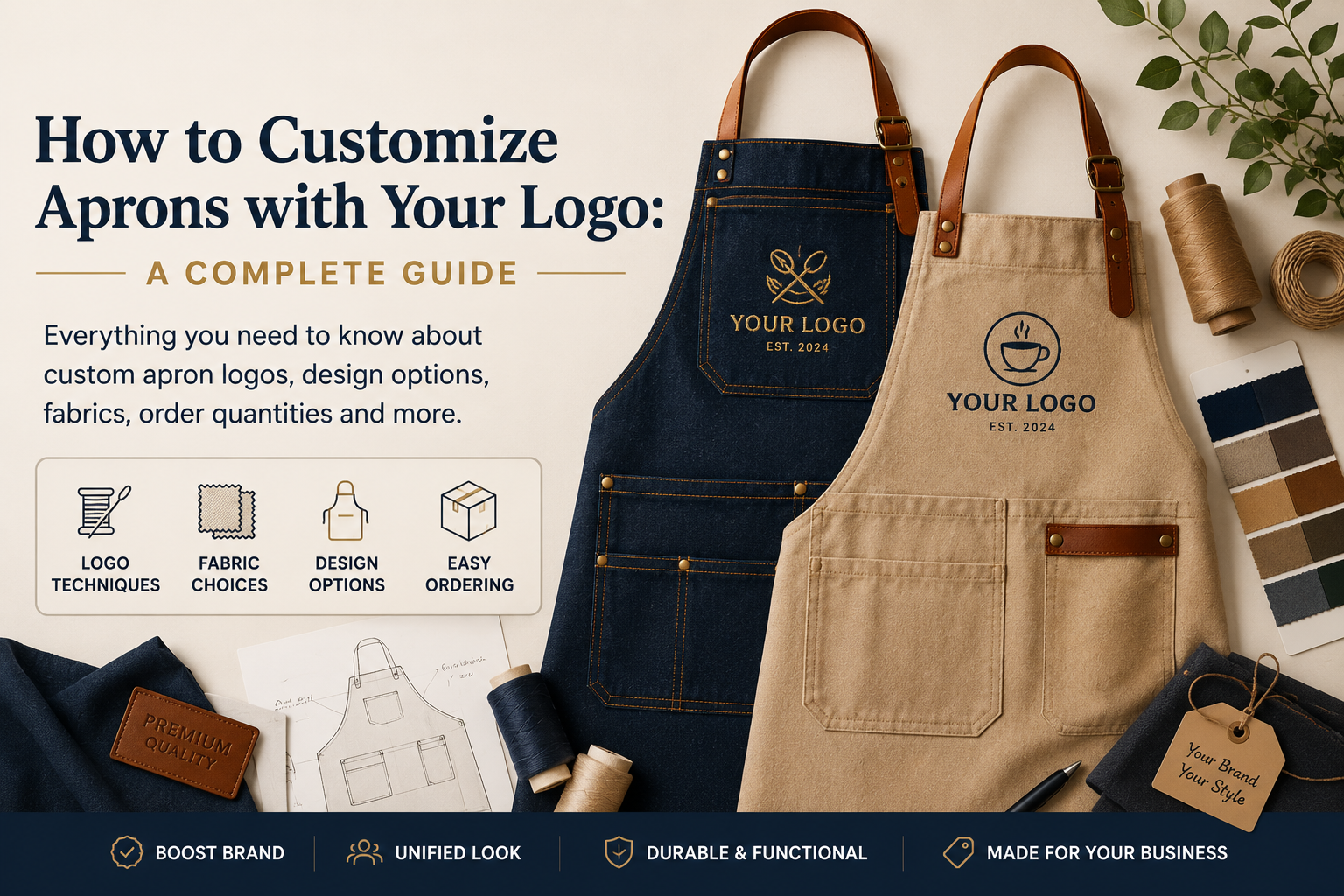
Custom aprons are a powerful way to create a professional image, strengthen brand recognition and give your team a consistent look.
Whether you run a restaurant, café, bakery, barbershop, retail store or another business, adding your logo to an apron can turn practical workwear into part of your brand identity.
But creating a good custom apron involves more than simply placing a logo on the front. You also need to consider the logo technique, fabric, apron style, colors, pockets, straps, sizing, order quantity and packaging.
This guide explains how to order custom aprons with logo, from the initial design idea to sample approval and bulk production.
1. Why Customize Aprons with Your Logo?
A custom apron does more than protect clothes. It can help customers identify your staff, reinforce your visual identity and make a business look more professional.
Custom aprons are especially useful for businesses where employees interact directly with customers, including cafés, restaurants, bakeries, bars, hotels, salons and retail stores.
Customization can also improve functionality. Instead of adapting your workflow to a standard apron, you can change the pockets, straps, fabric and dimensions to suit your team’s actual needs.
2. Logo Customization Methods
Different logo techniques produce different appearances and are suitable for different fabrics, quantities and designs.
The most common methods for customized aprons include embroidery, screen printing, heat transfer printing, DTF printing, patches and woven labels.
| Method | Main Advantages | Best For |
|---|---|---|
| Embroidery | Premium, professional and durable stitched appearance. | Cafés, restaurants, hotels, uniforms and workwear. |
| Screen Printing | Clean and cost-effective for simple logos and larger orders. | Restaurant uniforms, promotions and bulk orders. |
| Heat Transfer | Good for colorful graphics and detailed artwork. | Small and medium orders and multicolor logos. |
| DTF Printing | Suitable for detailed images, gradients and multiple colors. | Complex designs and illustrated logos. |
| Leather-Look Patch | Adds a premium vintage or workwear appearance. | Canvas aprons, denim aprons, cafés and barbershops. |
| Woven Label | Subtle branding that integrates naturally into the apron. | Retail brands, premium uniforms and minimalist designs. |
Embroidery
Embroidery is one of the most popular options for professional custom aprons. The logo is stitched directly onto the fabric using colored thread.
Embroidery works especially well for:
Very fine text or extremely detailed graphics may need to be simplified before embroidery so that the finished design remains clear.
Screen Printing
Screen printing is suitable for logos with relatively simple shapes and solid colors. It can be particularly efficient when producing larger quantities of the same apron design.
Heat Transfer and DTF Printing
Heat transfer and DTF printing are useful for designs containing multiple colors, gradients, illustrations or complex details.
The correct technique depends on the apron material and the final appearance required.
Patches and Woven Labels
A logo does not always need to be placed directly on the apron fabric.
Leather-look patches, fabric patches and woven labels are popular for workwear designs because they create a more distinctive and premium appearance.
This approach works especially well with canvas and denim aprons.
If you are deciding between these two materials, read our Canvas Apron vs Denim Apron comparison.
3. Apron Design Options
When ordering custom aprons, almost every important part of the product can potentially be adjusted.
4. Choosing the Right Fabric
The fabric has a major influence on the comfort, durability, appearance and cost of a custom apron.
Canvas
Canvas has a durable and structured appearance and is one of the most popular materials for premium workwear aprons.
It works particularly well with embroidery, patches, reinforced pockets and contrasting straps.
Denim
Denim creates a more casual, vintage and lifestyle-oriented appearance.
It is widely used in cafés, restaurants, barbershops and creative businesses.
Polyester
Polyester is lightweight, easy to maintain and suitable for large uniform orders.
It is commonly used for restaurants, catering and promotional aprons.
Nylon / Taslan
Lightweight woven synthetic fabrics can provide quick drying and useful splash resistance.
They are suitable for kitchens, cleaning, food service and other environments where lightweight comfort is important.
PVC and Waterproof Materials
Waterproof materials are useful when strong liquid protection is required.
They are commonly used for washing, cleaning and food-processing environments.
For a broader comparison of different fabrics, see our complete apron material and buying guide.
5. Choosing the Right Apron Style
The apron construction affects both comfort and appearance.
Neck-Strap Aprons
A traditional neck-strap apron is simple, familiar and easy to wear. Adjustable neck buckles can help improve fit for different users.
Cross-Back Aprons
Cross-back straps distribute the apron across the shoulders and back instead of placing the load directly around the neck.
This construction is popular with baristas and employees who wear aprons for long shifts.
Waist Aprons
Waist aprons provide greater freedom of movement and are commonly used by servers, waiters and bartenders.
Custom Apron Dimensions
Length and width can also be adjusted according to the working environment.
A shorter apron provides greater mobility, while a longer apron offers more body and leg coverage.
6. Popular Customization Elements
Some details can significantly change the appearance of a custom apron without completely changing the basic pattern.
Popular Custom Details
- Contrasting straps: Brown, black or beige straps can create a premium visual contrast.
- Metal hardware: Buckles, rivets and rings can strengthen the workwear style.
- Leather-look patches: Suitable for canvas and denim aprons.
- Contrast stitching: Adds visual detail without changing the overall construction.
- Custom pockets: Pocket size can be designed around phones, tools, order pads or towels.
- Removable towels: Useful for selected kitchen and food-service applications.
7. How to Order Custom Aprons: Step by Step
A clear order process helps reduce misunderstandings and makes sampling faster.
Define Your Requirements
Prepare the quantity, fabric, color, dimensions, strap design, pockets and logo requirements.
Send Your Logo
Whenever possible, provide a high-quality logo file such as AI, EPS, PDF, SVG or high-resolution PNG.
Confirm Logo Method and Position
Decide whether the logo will use embroidery, printing, a patch or a woven label.
Produce a Sample
A sample allows you to check the real fabric, fit, logo, pockets and overall construction.
Approve the Sample
Check the details carefully before approving bulk production.
Bulk Production
Once all specifications are confirmed, the manufacturer can begin production according to the approved sample.
8. Minimum Order Quantity (MOQ) and Lead Time
MOQ and production time depend on the complexity of the apron, fabric availability, logo method and customization requirements.
A simple stock apron with logo decoration may require less preparation than a completely customized design involving special fabrics, dimensions, hardware and packaging.
For custom orders, the sample stage should also be included in the project timeline.
9. Custom Apron Packaging
Packaging is particularly important for retailers, distributors and branded programs.
Common packaging options include:
Packaging requirements should be discussed before production because they may affect both price and production time.
10. Tips for a Great Custom Apron Design
Keep the Logo Clear
A logo does not need to be extremely large. A clean, well-positioned logo often looks more professional than oversized branding.
Choose Contrast Carefully
Make sure the logo can be clearly seen against the apron fabric.
For example, light embroidery works well on black or dark denim, while dark branding can work well on beige or khaki canvas.
Think About Daily Use
Consider where the employee will store a phone, pen, towel, order pad or tool before deciding the pocket design.
Do Not Automatically Choose the Heaviest Fabric
Heavy-duty fabric is useful for some jobs, but restaurant and café staff may prefer a lighter apron if they wear it all day.
Always Check the Sample
Photos and digital mockups are useful, but the final decision should consider the real fabric, color, dimensions and wearing experience.
11. Frequently Asked Questions
What is the best way to put a logo on an apron?
There is no single best method. Embroidery is ideal for premium professional branding, while screen printing, heat transfer and DTF can be better for larger or more detailed graphics.
Can canvas aprons be embroidered?
Yes. Canvas is generally an excellent fabric for embroidery because its woven structure provides good support for stitched logos.
Can denim aprons have custom logos?
Yes. Denim aprons can be customized using embroidery, printing, patches and labels.
Can I customize the pockets and straps?
Yes. Depending on order quantity and production requirements, apron dimensions, pockets, straps, hardware and other construction details can be customized.
Should I order a sample?
For custom apron orders, approving a sample before bulk production is strongly recommended.
This allows you to check the fabric, dimensions, logo, pockets, straps and workmanship before the full order is produced.
12. Final Thoughts
Creating a successful custom apron requires more than adding a logo to a standard product.
The fabric, colors, apron dimensions, straps, pockets, logo method and packaging should work together to create a product that represents the brand while remaining comfortable and practical for the wearer.
For restaurants, cafés, retailers and other businesses, a well-designed custom apron can become both a functional uniform and a long-term part of the brand identity.
The best results usually come from defining the requirements clearly, selecting the correct decoration method and approving a physical sample before bulk production.
Ready to Create Your Custom Aprons?
Send us your logo, quantity and customization requirements. JJ Apron can help you develop custom aprons for your business.
Custom aprons are a powerful way to create a professional image, strengthen brand recognition and give your team a consistent look.
Whether you run a restaurant, café, bakery, barbershop, retail store or another business, adding your logo to an apron can turn practical workwear into part of your brand identity.
But creating a good custom apron involves more than simply placing a logo on the front. You also need to consider the logo technique, fabric, apron style, colors, pockets, straps, sizing, order quantity and packaging.
This guide explains how to order custom aprons with logo, from the initial design idea to sample approval and bulk production.
1. Why Customize Aprons with Your Logo?
A custom apron does more than protect clothes. It can help customers identify your staff, reinforce your visual identity and make a business look more professional.
Custom aprons are especially useful for businesses where employees interact directly with customers, including cafés, restaurants, bakeries, bars, hotels, salons and retail stores.
Customization can also improve functionality. Instead of adapting your workflow to a standard apron, you can change the pockets, straps, fabric and dimensions to suit your team’s actual needs.
2. Logo Customization Methods
Different logo techniques produce different appearances and are suitable for different fabrics, quantities and designs.
The most common methods for customized aprons include embroidery, screen printing, heat transfer printing, DTF printing, patches and woven labels.
| Method | Main Advantages | Best For |
|---|---|---|
| Embroidery | Premium, professional and durable stitched appearance. | Cafés, restaurants, hotels, uniforms and workwear. |
| Screen Printing | Clean and cost-effective for simple logos and larger orders. | Restaurant uniforms, promotions and bulk orders. |
| Heat Transfer | Good for colorful graphics and detailed artwork. | Small and medium orders and multicolor logos. |
| DTF Printing | Suitable for detailed images, gradients and multiple colors. | Complex designs and illustrated logos. |
| Leather-Look Patch | Adds a premium vintage or workwear appearance. | Canvas aprons, denim aprons, cafés and barbershops. |
| Woven Label | Subtle branding that integrates naturally into the apron. | Retail brands, premium uniforms and minimalist designs. |
Embroidery
Embroidery is one of the most popular options for professional custom aprons. The logo is stitched directly onto the fabric using colored thread.
Embroidery works especially well for:
Very fine text or extremely detailed graphics may need to be simplified before embroidery so that the finished design remains clear.
Screen Printing
Screen printing is suitable for logos with relatively simple shapes and solid colors. It can be particularly efficient when producing larger quantities of the same apron design.
Heat Transfer and DTF Printing
Heat transfer and DTF printing are useful for designs containing multiple colors, gradients, illustrations or complex details.
The correct technique depends on the apron material and the final appearance required.
Patches and Woven Labels
A logo does not always need to be placed directly on the apron fabric.
Leather-look patches, fabric patches and woven labels are popular for workwear designs because they create a more distinctive and premium appearance.
This approach works especially well with canvas and denim aprons.
If you are deciding between these two materials, read our Canvas Apron vs Denim Apron comparison.
3. Apron Design Options
When ordering custom aprons, almost every important part of the product can potentially be adjusted.
4. Choosing the Right Fabric
The fabric has a major influence on the comfort, durability, appearance and cost of a custom apron.
Canvas
Canvas has a durable and structured appearance and is one of the most popular materials for premium workwear aprons.
It works particularly well with embroidery, patches, reinforced pockets and contrasting straps.
Denim
Denim creates a more casual, vintage and lifestyle-oriented appearance.
It is widely used in cafés, restaurants, barbershops and creative businesses.
Polyester
Polyester is lightweight, easy to maintain and suitable for large uniform orders.
It is commonly used for restaurants, catering and promotional aprons.
Nylon / Taslan
Lightweight woven synthetic fabrics can provide quick drying and useful splash resistance.
They are suitable for kitchens, cleaning, food service and other environments where lightweight comfort is important.
PVC and Waterproof Materials
Waterproof materials are useful when strong liquid protection is required.
They are commonly used for washing, cleaning and food-processing environments.
For a broader comparison of different fabrics, see our complete apron material and buying guide.
5. Choosing the Right Apron Style
The apron construction affects both comfort and appearance.
Neck-Strap Aprons
A traditional neck-strap apron is simple, familiar and easy to wear. Adjustable neck buckles can help improve fit for different users.
Cross-Back Aprons
Cross-back straps distribute the apron across the shoulders and back instead of placing the load directly around the neck.
This construction is popular with baristas and employees who wear aprons for long shifts.
Waist Aprons
Waist aprons provide greater freedom of movement and are commonly used by servers, waiters and bartenders.
Custom Apron Dimensions
Length and width can also be adjusted according to the working environment.
A shorter apron provides greater mobility, while a longer apron offers more body and leg coverage.
6. Popular Customization Elements
Some details can significantly change the appearance of a custom apron without completely changing the basic pattern.
Popular Custom Details
- Contrasting straps: Brown, black or beige straps can create a premium visual contrast.
- Metal hardware: Buckles, rivets and rings can strengthen the workwear style.
- Leather-look patches: Suitable for canvas and denim aprons.
- Contrast stitching: Adds visual detail without changing the overall construction.
- Custom pockets: Pocket size can be designed around phones, tools, order pads or towels.
- Removable towels: Useful for selected kitchen and food-service applications.
7. How to Order Custom Aprons: Step by Step
A clear order process helps reduce misunderstandings and makes sampling faster.
Define Your Requirements
Prepare the quantity, fabric, color, dimensions, strap design, pockets and logo requirements.
Send Your Logo
Whenever possible, provide a high-quality logo file such as AI, EPS, PDF, SVG or high-resolution PNG.
Confirm Logo Method and Position
Decide whether the logo will use embroidery, printing, a patch or a woven label.
Produce a Sample
A sample allows you to check the real fabric, fit, logo, pockets and overall construction.
Approve the Sample
Check the details carefully before approving bulk production.
Bulk Production
Once all specifications are confirmed, the manufacturer can begin production according to the approved sample.
8. Minimum Order Quantity (MOQ) and Lead Time
MOQ and production time depend on the complexity of the apron, fabric availability, logo method and customization requirements.
A simple stock apron with logo decoration may require less preparation than a completely customized design involving special fabrics, dimensions, hardware and packaging.
For custom orders, the sample stage should also be included in the project timeline.
9. Custom Apron Packaging
Packaging is particularly important for retailers, distributors and branded programs.
Common packaging options include:
Packaging requirements should be discussed before production because they may affect both price and production time.
10. Tips for a Great Custom Apron Design
Keep the Logo Clear
A logo does not need to be extremely large. A clean, well-positioned logo often looks more professional than oversized branding.
Choose Contrast Carefully
Make sure the logo can be clearly seen against the apron fabric.
For example, light embroidery works well on black or dark denim, while dark branding can work well on beige or khaki canvas.
Think About Daily Use
Consider where the employee will store a phone, pen, towel, order pad or tool before deciding the pocket design.
Do Not Automatically Choose the Heaviest Fabric
Heavy-duty fabric is useful for some jobs, but restaurant and café staff may prefer a lighter apron if they wear it all day.
Always Check the Sample
Photos and digital mockups are useful, but the final decision should consider the real fabric, color, dimensions and wearing experience.
11. Frequently Asked Questions
What is the best way to put a logo on an apron?
There is no single best method. Embroidery is ideal for premium professional branding, while screen printing, heat transfer and DTF can be better for larger or more detailed graphics.
Can canvas aprons be embroidered?
Yes. Canvas is generally an excellent fabric for embroidery because its woven structure provides good support for stitched logos.
Can denim aprons have custom logos?
Yes. Denim aprons can be customized using embroidery, printing, patches and labels.
Can I customize the pockets and straps?
Yes. Depending on order quantity and production requirements, apron dimensions, pockets, straps, hardware and other construction details can be customized.
Should I order a sample?
For custom apron orders, approving a sample before bulk production is strongly recommended.
This allows you to check the fabric, dimensions, logo, pockets, straps and workmanship before the full order is produced.
12. Final Thoughts
Creating a successful custom apron requires more than adding a logo to a standard product.
The fabric, colors, apron dimensions, straps, pockets, logo method and packaging should work together to create a product that represents the brand while remaining comfortable and practical for the wearer.
For restaurants, cafés, retailers and other businesses, a well-designed custom apron can become both a functional uniform and a long-term part of the brand identity.
The best results usually come from defining the requirements clearly, selecting the correct decoration method and approving a physical sample before bulk production.
Ready to Create Your Custom Aprons?
Send us your logo, quantity and customization requirements. JJ Apron can help you develop custom aprons for your business.