
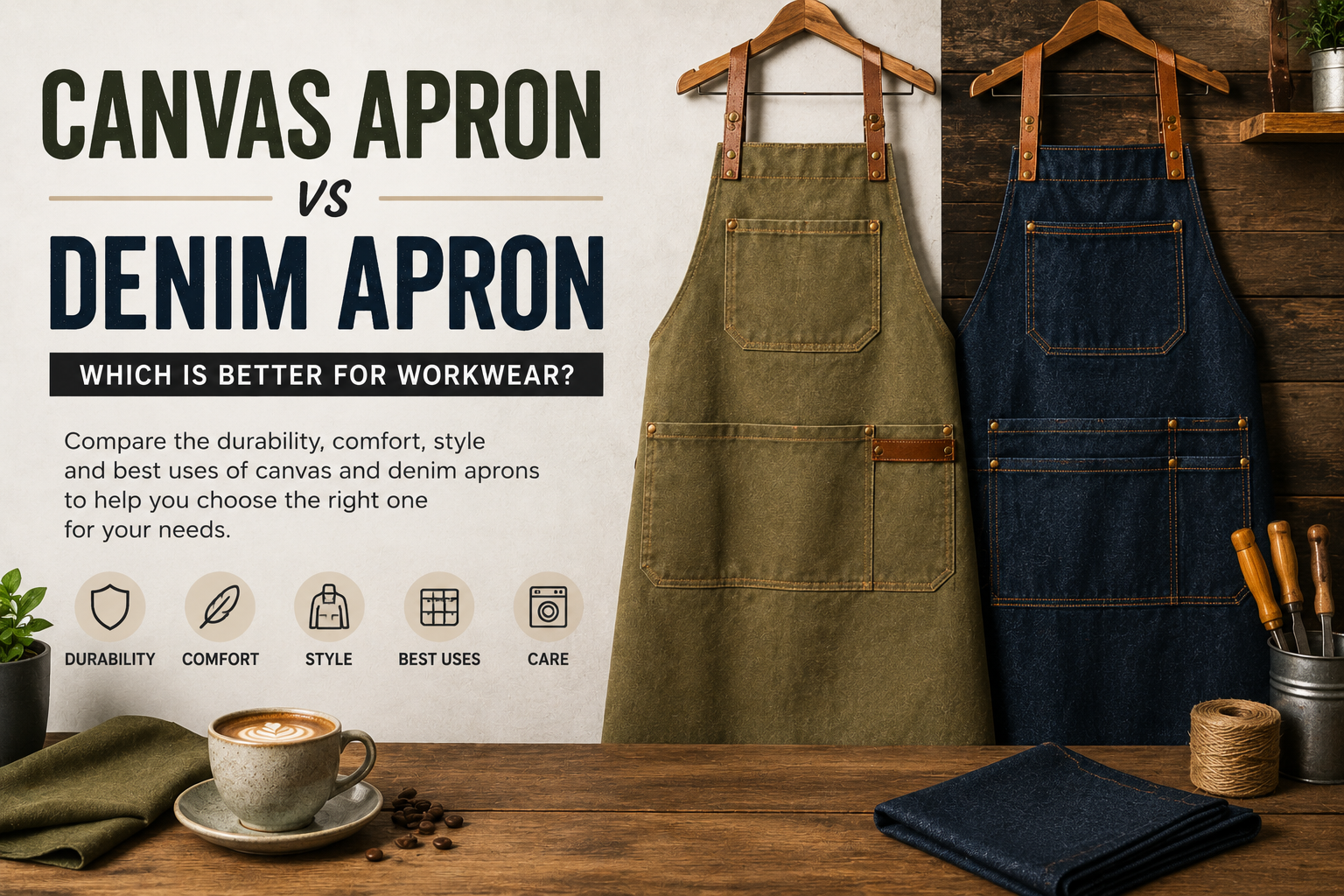
Canvas and denim are two of the most popular materials used for work aprons. Both are durable, practical and visually distinctive, which is why they are commonly found in cafés, restaurants, workshops, barbershops and other professional environments.
However, canvas and denim do not feel or perform exactly the same. Canvas usually offers a more structured and rugged appearance, while denim tends to create a softer, more casual workwear look.
In this guide, we compare canvas aprons vs denim aprons in terms of durability, comfort, weight, appearance, maintenance, customization and typical applications.
If you are still deciding between different apron materials, read our complete guide to choosing the right apron.
1. What Is a Canvas Apron?
Canvas Apron
Canvas is a tightly woven fabric known for its durability and structured feel. Depending on yarn type, fabric weight and finishing process, canvas can range from relatively lightweight hospitality fabric to heavier material designed for workshops and utility work.
Canvas aprons are especially popular when the buyer wants a strong, clean and professional workwear appearance.
2. What Is a Denim Apron?
Denim Apron
Denim is a durable twill fabric most commonly associated with jeans and traditional workwear. Its diagonal weave gives the material a recognizable texture and creates a more relaxed, vintage-inspired appearance.
Denim aprons are often selected by cafés, restaurants, barbershops and retail brands that want staff uniforms to feel less formal and more lifestyle-oriented.
3. Canvas Apron vs Denim Apron: Quick Comparison
The table below gives a quick side-by-side comparison.
| Feature | Canvas Apron | Denim Apron |
|---|---|---|
| Durability | High | High |
| Structure | More structured | Softer and more flexible |
| Appearance | Clean, rugged, professional | Casual, vintage, lifestyle |
| Comfort | Depends on fabric weight | Often softens with use |
| Color Options | Wide range | Mostly blue, black and washed tones |
| Embroidery | Excellent | Excellent |
| Printing | Good | Good, depending on color and surface |
| Best For | Cafés, workshops, restaurants, workwear | Cafés, restaurants, barbershops, retail |
4. Which Material Is More Durable?
Both canvas and denim can be highly durable, but durability depends on more than the fabric name.
What Affects Apron Durability?
Canvas Durability
Canvas is especially useful when an apron needs to support large pockets, tools or heavier accessories.
Its structured surface works well with reinforced stitching and utility-style construction.
Denim Durability
Denim also performs well under repeated wear. Its twill construction provides good strength while allowing the fabric to become more flexible over time.
For hospitality use, denim often provides strong durability without feeling as rigid as heavier canvas.
5. Which Apron Is More Comfortable?
Comfort is influenced by fabric weight, apron dimensions and strap construction.
A heavy apron can become tiring during an eight-hour shift even if the fabric itself is extremely durable. For restaurant and café staff, lighter construction is often more practical than simply choosing the thickest fabric available.
Canvas Comfort
Canvas can feel firm when new, especially when heavier fabric is used.
Lightweight canvas is often better for hospitality uniforms because it retains the workwear appearance while reducing unnecessary weight.
Denim Comfort
Denim usually becomes softer and more flexible after repeated wear and washing.
This makes it particularly suitable for staff who wear aprons throughout long shifts.
Strap Design Matters Too
The difference between a neck-strap apron and a cross-back apron can affect comfort just as much as the fabric itself.
A cross-back design distributes weight across the shoulders and back, which many users prefer when wearing heavier canvas or denim aprons.
6. Appearance and Brand Style
For restaurants, cafés and retail businesses, an apron is not only protective clothing. It is also part of the visual identity of the brand.
Canvas Style
Canvas usually creates a clean, structured and professional workwear appearance.
Popular colors:
Black Khaki Olive Green Brown Beige GreyCanvas works particularly well for artisan, industrial, rustic and professional brand styles.
Denim Style
Denim creates a more relaxed and familiar appearance.
Dark indigo can look clean and premium, while washed denim creates a more casual and vintage feeling.
Popular for:
Coffee Shops Barbershops Casual Restaurants Retail7. Which Material Is Better for Customization?
Both canvas and denim are highly suitable for custom apron production.
The best decoration method depends on the logo design, fabric color, quantity and required appearance.
Embroidery
Embroidery works especially well on both fabrics because canvas and denim usually provide a stable surface for stitched logos.
Printed Logos
Screen printing, heat transfer and other methods can be used depending on the fabric and artwork.
Logo contrast should always be considered when selecting dark denim or dark canvas.
Patches and Labels
Canvas and denim both work particularly well with woven labels, fabric patches, leather-look patches and metal accessories.
For a complete explanation of logo methods, see our guide to customizing aprons with your logo.
8. Washing and Maintenance
For commercial users, the appearance of an apron after repeated washing is an important consideration.
Washing Canvas Aprons
Canvas care requirements depend on fiber content, fabric weight and special coatings or accessories.
Some canvas fabrics soften after washing, while darker colors may gradually fade.
Metal hardware and special patches should also be considered when selecting the washing method.
Washing Denim Aprons
Denim naturally changes in appearance with repeated washing.
This can be desirable when a vintage or worn-in appearance is part of the brand style.
Businesses that require consistent shades should consider how denim color may change over time.
9. Best Uses for Canvas and Denim Aprons
Cafés and Baristas
Both materials are excellent choices.
Choose canvas for a structured artisan or professional appearance.
Choose denim for a casual, vintage or lifestyle-inspired look.
Restaurants
Staff who move constantly may prefer lightweight canvas or denim instead of very heavy workwear fabric.
A premium restaurant may prefer dark canvas, while a casual restaurant may find denim more suitable.
Workshops
Canvas often has an advantage because its structured construction supports large reinforced utility pockets very well.
Heavy denim can also work well for craft studios and lighter workshop tasks.
Barbershops
Denim is especially popular because it complements classic workwear and vintage barber branding.
Dark canvas is a good alternative for a cleaner, more minimalist appearance.
Retail Staff
Denim creates a relaxed lifestyle image, while canvas provides a more structured and premium appearance.
10. How to Choose Between Canvas and Denim
If you are still deciding, use this quick buying guide.
11. Frequently Asked Questions
Is canvas stronger than denim?
Not necessarily. Both materials can be highly durable. Strength depends on fabric weight, yarn, weave density and overall construction. Heavy canvas often feels more rigid and rugged, while denim combines durability with greater flexibility.
Is canvas or denim better for a barista apron?
Both are popular choices. Canvas works well for a structured artisan appearance, while denim is ideal for a relaxed and vintage café style.
Which material is better for embroidery?
Both canvas and denim are generally excellent for embroidery because their woven structures provide a stable surface for stitched logos.
Does denim fade faster than canvas?
Denim is known for developing visible fading and character over time. Canvas may also fade depending on its dye and washing method, but the effect is usually less distinctive.
Which material is better for custom apron manufacturing?
Both are suitable for custom manufacturing. Canvas provides more flexibility in color and structured workwear styling, while denim offers a recognizable texture and premium casual appearance.
Final Thoughts
There is no universal winner in the canvas apron vs denim apron comparison.
Canvas is an excellent choice when durability, structure and a clean workwear appearance are priorities. Denim is equally practical but offers a softer, more casual and vintage-inspired style.
For cafés, restaurants, barbershops and retail businesses, both materials can create excellent professional aprons when fabric weight, straps, pockets and branding are selected carefully.
The most important step is to match the material to the actual working environment rather than choosing based only on appearance.
Need Custom Canvas or Denim Aprons?
JJ Apron provides custom apron manufacturing for restaurants, cafés, retailers, wholesalers and other businesses.
Choose your fabric, color, apron size, straps, pockets, embroidery, printing, labels, patches and packaging.