
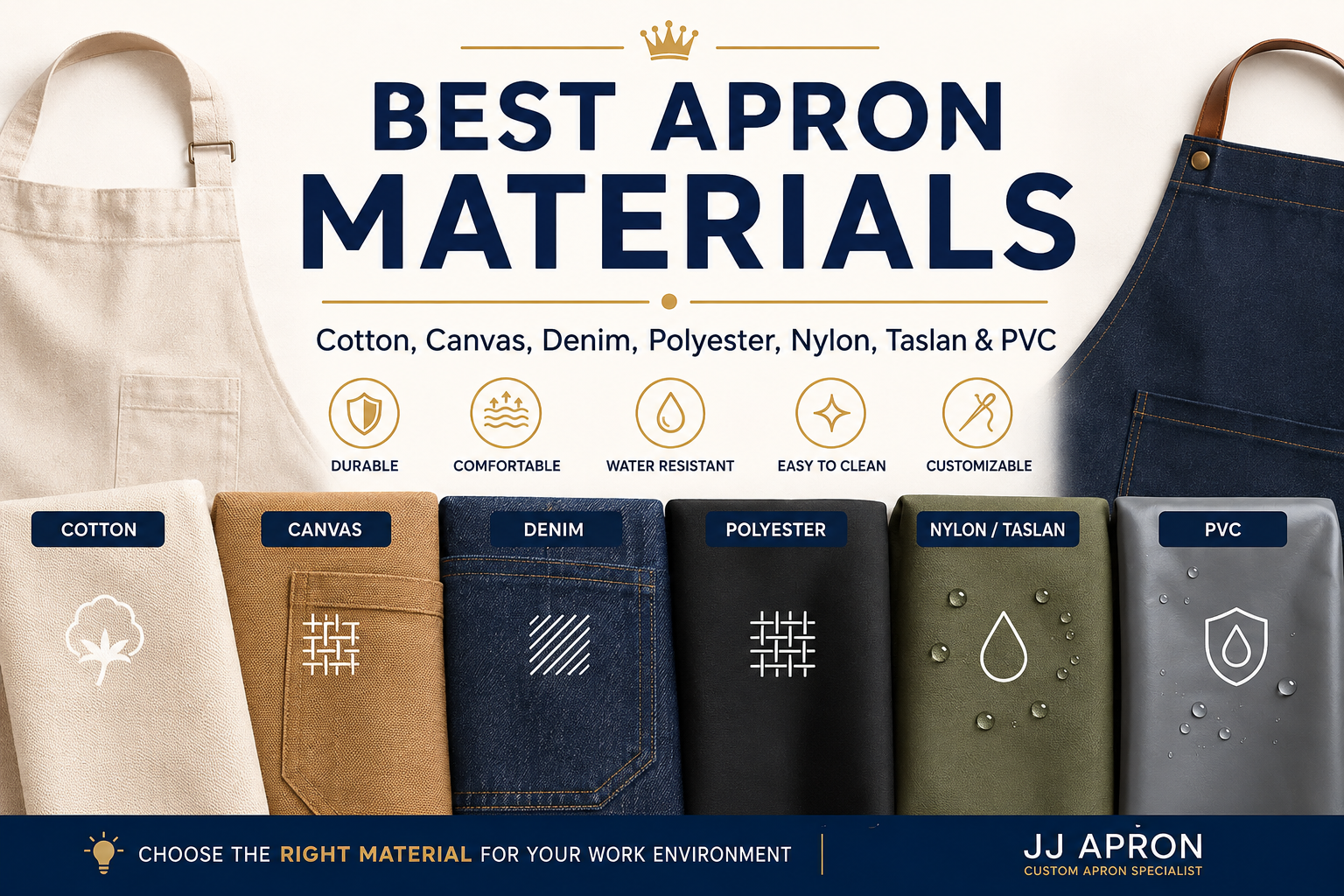
Choosing the best apron material is one of the most important decisions when selecting or designing an apron. The fabric affects how the apron feels, how long it lasts, how easy it is to clean and how well it protects the wearer during work.
A breathable cotton apron can be comfortable in a bakery, while a durable canvas apron may be more suitable for a barista or craft worker. Lightweight polyester and nylon fabrics are practical for fast-moving food-service environments, while PVC and coated materials provide stronger protection from water and liquids.
In this guide, we compare the most common apron materials, including cotton, canvas, denim, polyester, nylon, Taslan and PVC, to help you choose the right fabric for your application.
If you are choosing an apron for the first time, you may also want to read our complete guide to choosing the right apron.
1. What Makes a Good Apron Material?
There is no single fabric that is perfect for every apron. The best material depends on the working environment and the type of protection required.
Key Factors to Consider
For example, a workshop user may prioritize durability and reinforced construction, while restaurant staff may prefer a lighter material that remains comfortable during long shifts.
2. Cotton Aprons
Cotton: Soft, Breathable and Natural
Cotton is one of the most familiar apron fabrics. It is a natural fiber known for its soft hand feel and breathability.
Advantages of Cotton Aprons
Cotton is comfortable when worn for long periods and works well in environments where extreme water resistance is not required.
It can also provide a natural, soft appearance that suits bakeries, cafés and hospitality brands.
Limitations of Cotton
Untreated cotton absorbs water more easily than synthetic materials. It can also wrinkle and may require more drying time after washing.
If the apron will frequently come into contact with water, oils or cleaning liquids, a coated or synthetic fabric may be more practical.
3. Canvas Aprons
Canvas: Durable and Structured
Canvas is a densely woven fabric widely used for professional work aprons. It can be produced in different weights, from relatively lightweight hospitality fabrics to heavy-duty workshop materials.
Advantages of Canvas Aprons
Canvas is especially useful when the apron needs to support larger pockets, tools, hardware or reinforced construction.
Its appearance also works well for brands that want an artisan, industrial or premium workwear style.
Lightweight vs Heavy Canvas
Heavy canvas provides greater structure and ruggedness, but it can also increase the overall weight of the apron.
For cafés and restaurants, a lighter canvas can often provide a better balance between durability and comfort.
4. Denim Aprons
Denim: Durable with a Casual Workwear Style
Denim is a twill-woven fabric known for its recognizable texture and workwear heritage.
Advantages of Denim Aprons
Denim provides durability while creating a softer and more casual appearance than many canvas fabrics.
It is particularly popular in coffee shops, casual restaurants, barbershops and lifestyle-oriented retail environments.
Denim Changes with Use
One characteristic of denim is that it can gradually soften and fade over time.
For some brands, this aging process creates an attractive vintage appearance. For businesses requiring highly consistent uniform colors, it should be considered before placing a bulk order.
For a detailed comparison, read our Canvas Apron vs Denim Apron guide.
5. Polyester Aprons
Polyester: Lightweight and Easy to Maintain
Polyester is widely used for commercial uniforms because it combines practicality with relatively easy maintenance.
Why Businesses Choose Polyester
Polyester is practical for restaurants and companies that need many aprons to maintain a relatively consistent appearance.
It can also be blended with cotton to improve softness while retaining some of the maintenance advantages of synthetic fibers.
Limitations of Polyester
Polyester generally does not provide the same natural hand feel as cotton and may not create the same heavy-duty appearance as canvas or denim.
However, for everyday uniforms, its low maintenance requirements can be a major advantage.
6. Nylon and Taslan Aprons
Nylon / Taslan: Lightweight, Smooth and Practical
Nylon and Taslan-style woven fabrics are useful when an apron needs to remain lightweight while offering quick drying and splash-resistant properties.
Why Choose Taslan or Nylon?
These fabrics are especially useful where workers move frequently and do not want the weight of heavy canvas or denim.
Depending on the fabric finishing, they can also provide useful resistance to splashes and light moisture.
When Lightweight Fabrics Make Sense
In hot kitchens, cleaning environments and active food-service work, lightweight fabrics can improve comfort while still providing useful front-body protection.
7. PVC and Waterproof Aprons
PVC: Strong Liquid Protection
PVC and other waterproof apron materials are designed for environments where protection from water and liquids is more important than breathability.
Advantages of Waterproof Aprons
Waterproof aprons can prevent liquids from quickly soaking through to the wearer’s clothing.
They are useful in dishwashing areas, cleaning environments and food-processing tasks where frequent liquid exposure is expected.
Comfort Considerations
Waterproof materials are generally less breathable than traditional woven fabrics.
For long shifts in warm environments, buyers may need to balance protection with comfort rather than automatically selecting the most waterproof material available.
8. Apron Material Comparison Table
The following table provides a quick comparison of common apron fabrics.
| Material | Durability | Comfort | Water Resistance | Typical Uses |
|---|---|---|---|---|
| Cotton | Medium | High | Low | Kitchen, bakery, café |
| Canvas | High | Medium to High | Low to Medium | Café, workshop, workwear |
| Denim | High | High | Low to Medium | Café, restaurant, barber |
| Polyester | Medium to High | High | Medium | Restaurant, catering, uniforms |
| Nylon / Taslan | Medium to High | High | Medium to High | Kitchen, cleaning, food service |
| PVC | High | Low to Medium | Very High | Dishwashing, cleaning, wet work |
9. Best Apron Material by Industry
Restaurants
Lightweight polyester, cotton blends and lightweight canvas are common choices because restaurant staff often need comfort, mobility and easy maintenance.
Cafés and Baristas
Canvas and denim are especially popular because they combine durability with a strong visual identity.
Bakeries
Cotton and cotton-blend fabrics provide a comfortable and familiar option for bakery staff.
Cleaning and Wet Environments
Nylon, Taslan, coated polyester and PVC are more appropriate where splash or liquid protection is important.
Workshops and Craft Studios
Canvas and heavy denim are strong options because they work well with reinforced stitching, utility pockets and heavier construction.
10. Best Apron Materials for Customization
Businesses ordering branded aprons should also consider how the fabric works with logo decoration.
| Material | Embroidery | Printing | Patches |
|---|---|---|---|
| Cotton | Good | Excellent | Good |
| Canvas | Excellent | Good | Excellent |
| Denim | Excellent | Good | Excellent |
| Polyester | Good | Excellent | Good |
| Nylon / Taslan | Depends on fabric weight | Good | Depends on construction |
| PVC | Limited | Requires suitable method | Depends on design |
For a complete explanation of logo techniques, embroidery, printing and patches, see our guide to custom aprons with logo.
11. How to Choose the Right Apron Fabric
When comparing apron materials, start with the working environment rather than appearance alone.
Ask These Questions Before Choosing
12. Frequently Asked Questions
What is the best apron material?
There is no single best material for every use. Canvas is excellent for durable workwear, cotton is comfortable and breathable, denim offers a casual workwear style, polyester is easy to maintain, nylon is lightweight and PVC provides strong liquid protection.
What is the most durable apron material?
Heavy canvas and denim are both highly durable woven fabrics. PVC can also be durable in wet environments, but it serves a different purpose because it prioritizes liquid protection rather than breathability.
What is the best apron material for restaurants?
Restaurants often benefit from lightweight polyester, cotton blends or lightweight canvas because staff need a balance of comfort, durability and easy maintenance.
What is the best material for a barista apron?
Canvas and denim are two of the most popular options. Canvas provides a structured artisan appearance, while denim creates a softer and more casual workwear look.
What is the best waterproof apron material?
PVC and other coated waterproof fabrics provide strong liquid protection. For lighter splash resistance, nylon, Taslan or coated polyester may provide a more comfortable option.
Which apron material is best for embroidery?
Canvas and denim are excellent choices because their stable woven structures support embroidery well. Cotton and polyester can also work well depending on fabric weight and construction.
Final Thoughts
The best apron material depends on the job the apron needs to perform.
Cotton provides softness and breathability. Canvas offers durability and structure. Denim combines strength with a relaxed workwear appearance. Polyester is practical and easy to maintain, while nylon and Taslan are useful for lightweight, quick-drying and splash-resistant designs. PVC is more suitable when strong liquid protection is required.
For businesses ordering aprons in bulk, the material should also be evaluated together with the apron size, strap construction, pocket design, logo method and washing requirements.
Choosing the correct fabric at the beginning can improve comfort, durability and the overall performance of the finished apron.
Need Help Choosing an Apron Material?
JJ Apron provides custom apron manufacturing for restaurants, cafés, retailers, wholesalers and other businesses.
Choose your fabric, color, size, straps, pockets, logo method, labels and packaging.