
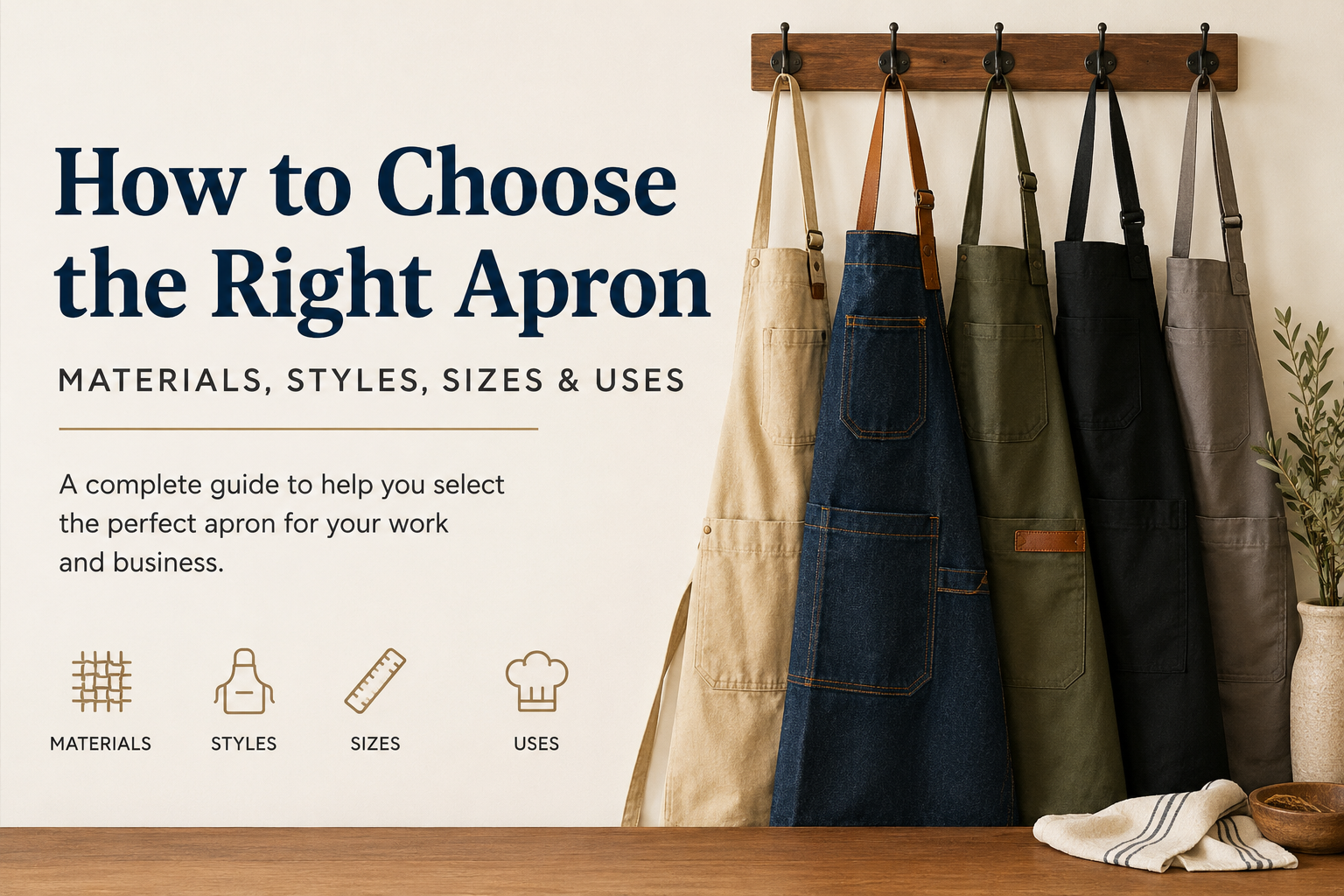
Choosing the right apron is about more than appearance. The material, strap design, size, pocket layout and level of protection can all affect how comfortable and practical an apron is during daily work.
A lightweight apron may be ideal for restaurant staff who move constantly throughout the day, while a heavier canvas apron may be better suited to baristas, craftspeople or workshop users who need greater durability. In wet environments, water-resistant or waterproof materials can be more important than fabric weight or appearance.
This guide explains how to choose the right apron based on material, style, size, function and working environment. It also compares common apron fabrics including cotton, canvas, denim, polyester, nylon/Taslan and PVC.
1. What Should You Consider When Choosing an Apron?
Before comparing fabrics or colors, start with the way the apron will actually be used. A good apron should match the working environment instead of forcing the wearer to adapt to the product.
Intended Use
The first question is simple: where will the apron be worn?
An apron for a café has different requirements from one used for dishwashing, food preparation, woodworking or cleaning.
Material
Apron material influences durability, comfort, weight, appearance, cleaning requirements and water resistance. There is no single best apron material for every application.
Canvas provides a structured and durable feel, denim offers a casual workwear appearance, polyester is practical for uniforms, and coated synthetic fabrics are useful where splash protection matters.
Apron Style
Common designs include bib aprons, waist aprons, neck-strap aprons and cross-back aprons.
If an apron is worn for many hours, strap design becomes especially important. Cross-back straps distribute weight across the shoulders and back, while a traditional neck strap offers a simpler construction.
Size and Coverage
Consider both the length and width of the apron. A longer apron provides more lower-body coverage, while a shorter design usually allows greater freedom of movement.
Pockets and Functional Details
Pockets should match the user’s actual work rather than simply adding as many compartments as possible.
Customization
For restaurants, cafés, retailers and other businesses, the apron can also become part of the brand image.
Custom aprons can be produced with different fabrics, colors, logos, labels, straps, pockets and packaging.
2. How to Choose the Right Apron Material
The best apron material depends on how often the apron is worn, the level of protection required and the image you want to create.
Cotton Aprons
Cotton is a natural fabric commonly used for kitchen, bakery and casual aprons. It has a soft hand feel and is generally comfortable for extended wear.
Cotton absorbs moisture more readily than many synthetic materials, so it may not be ideal for frequent water or oil splashes unless treated with a protective finish.
Canvas Aprons
Canvas is one of the most popular materials for durable work aprons. Its dense woven construction gives the apron a more structured and substantial appearance.
Heavier canvas is useful when abrasion resistance matters, while lighter canvas can provide a better balance between durability and comfort for hospitality use.
Denim Aprons
Denim combines durability with a recognizable casual and vintage-inspired appearance.
Canvas usually offers a more structured workwear look, while denim creates a softer and more relaxed style.
You can compare them in more detail in our Canvas Apron vs Denim Apron guide.
Polyester Aprons
Polyester is commonly used for commercial uniforms because it is lightweight, practical and relatively easy to maintain.
Nylon and Taslan Aprons
Nylon and Taslan-style woven fabrics are useful when a lightweight, smooth and practical apron is required.
PVC and Waterproof Aprons
PVC aprons are designed for environments where liquid protection is more important than breathability.
Because PVC is less breathable than woven fabrics, it may be less comfortable for long periods in hot environments.
3. Apron Material Comparison
The table below provides a quick comparison of common apron materials.
| Material | Durability | Comfort | Water Resistance | Typical Uses |
|---|---|---|---|---|
| Cotton | Medium | High | Low | Kitchen, bakery, café |
| Canvas | High | Medium to High | Low to Medium | Café, workshop, workwear |
| Denim | High | High | Low to Medium | Café, restaurant, barber |
| Polyester | Medium to High | High | Medium | Restaurant, catering, uniforms |
| Nylon / Taslan | Medium to High | High | Medium to High | Kitchen, cleaning, food service |
| PVC | High | Low to Medium | Very High | Dishwashing, cleaning, wet work |
4. How to Choose the Right Apron Style
After choosing the material, the next step is selecting the apron construction.
Bib Apron
A bib apron covers both the chest and lower body and is one of the most versatile apron styles.
Best for: kitchens, cafés, restaurants, workshops and general work.
Waist Apron
A waist apron leaves the upper body uncovered and provides greater freedom of movement.
Best for: servers, bartenders and hospitality staff.
Neck-Strap Apron
A traditional neck-strap apron is simple, familiar and easy to put on. Adjustable buckles can help improve the fit.
Best for: kitchens, restaurants and promotional use.
Cross-Back Apron
Cross-back straps distribute weight across the shoulders and back instead of placing the load directly on the neck.
Best for: long shifts, cafés, workshops and premium workwear.
5. How to Choose the Right Apron Size
Apron sizing is more flexible than normal clothing, but body dimensions still affect coverage and comfort.
Apron Length
Apron Width
Width determines how much of the front and sides of the body are protected. A wider design provides greater coverage, while a narrower apron may feel lighter.
Adjustable Straps
For bulk uniform orders, checking the fit on several different body types during the sample stage can help avoid sizing problems.
6. Choose an Apron Based on Your Industry
Restaurants
Restaurant aprons should balance professional appearance, comfort and easy maintenance.
Cafés and Baristas
Canvas and denim are popular because they combine durability with a strong workwear appearance. Cross-back straps are also useful for long shifts.
Bakeries
Cotton, cotton blends and lightweight polyester are practical because they are comfortable and relatively easy to wash.
Kitchens
Kitchen aprons should provide enough coverage without restricting movement. Cotton and polyester work well for light kitchen use, while water-resistant fabrics are useful where splashes are frequent.
Workshops and Crafts
Canvas and denim are strong choices where durability, reinforced stitching and practical tool pockets are required.
Cleaning and Wet Environments
Nylon, Taslan-style fabrics, coated polyester and PVC can all be considered depending on the level of water protection required.
7. What Features Make a Good Work Apron?
8. Standard Aprons vs Custom Aprons
| Feature | Standard Aprons | Custom Aprons |
|---|---|---|
| Quantity | Good for small orders | Best for team and bulk orders |
| Fabric | Pre-selected | Can be customized |
| Color | Limited options | Custom colors possible |
| Logo | Usually none | Printing, embroidery or patches |
| Pockets | Fixed design | Custom layouts possible |
| Branding | General use | Designed for your brand |
Depending on the design and order quantity, custom apron options can include:
For more details, see our complete guide to custom aprons with logo.
9. Quick Apron Buying Checklist
Before choosing or ordering an apron, ask yourself these questions:
10. Frequently Asked Questions
What is the best material for an apron?
There is no single best material for every apron. Cotton is comfortable and breathable, canvas is durable and structured, denim provides a casual workwear appearance, polyester is practical for uniforms, and nylon or waterproof materials are useful when splash protection is required.
Is canvas or denim better for an apron?
Canvas is often preferred when structure and rugged durability are priorities. Denim is also durable but usually provides a softer and more casual appearance.
Are cross-back aprons more comfortable?
Cross-back aprons distribute the weight across the shoulders and back instead of placing the load directly on the neck, which many users prefer during long shifts.
What type of apron is best for restaurants?
Restaurant aprons should be comfortable, easy to clean and durable enough for frequent use. Polyester, cotton blends, lightweight canvas and easy-care woven fabrics are common options.
What type of apron is best for waterproof protection?
For frequent exposure to water, PVC or other waterproof coated materials can provide strong protection. For occasional splashes, lighter water-resistant nylon or polyester may offer better comfort.
Final Thoughts
There is no single apron that is perfect for every job. The right choice depends on the working environment, required level of protection, comfort, appearance and maintenance.
For restaurants and cafés, lightweight fabrics, practical pockets and comfortable straps may be the priority. Canvas and denim work well when durability and workwear style matter, while nylon, coated fabrics and PVC are better suited to environments where water resistance is required.
For businesses purchasing larger quantities, customization is also worth considering from the beginning. Fabric, size, straps, pockets, colors and branding can all be adjusted to better match the real working environment.
Looking for Custom Aprons?
JJ Apron provides custom apron manufacturing for restaurants, cafés, retailers, wholesalers and other businesses.
Choose your fabric, color, size, logo, pockets, straps, labels and packaging.